
What Is ABA Therapy? A Plain-English Guide for Parents
Applied Behavior Analysis (ABA) is the most widely used therapy for children with autism. Here is what it is, what a session looks like, what the research actually says, and how to tell a good program from a poor one.
ABA in one sentence
Applied Behavior Analysis is a way of teaching meaningful skills, and reducing behaviors that get in the way, by carefully looking at what happens before and after a behavior and then changing the environment so the helpful behavior becomes easier and more rewarding. The field was formally described in 1968[1], and Florida law defines it as the design and modification of environments "to produce socially significant improvement in human behavior"[2].
At Thrive our motto is "When a flower doesn't bloom, you fix the environment, not the flower." That is ABA in a nutshell: we change what is around the child, not who the child is.
Why so many families are asking about ABA
The CDC's most recent surveillance report estimates that about 1 in 31 eight-year-olds in the United States has been identified with autism spectrum disorder[3]. Most of those families are told about ABA early on, often by their pediatrician or the clinician who made the diagnosis.
What ABA works on
- Communication: requesting, answering, following directions, and replacing frustration with words, signs or devices
- Daily living skills: toileting, dressing, hygiene, mealtimes, sleep routines
- Social and play skills: turn-taking, joint attention, playing near and with peers
- Learning readiness: attending, imitating, waiting, following classroom routines
- Challenging behavior: tantrums, aggression, self-injury and running off, addressed by understanding why they happen and teaching a better way to get the same need met
What a session actually looks like
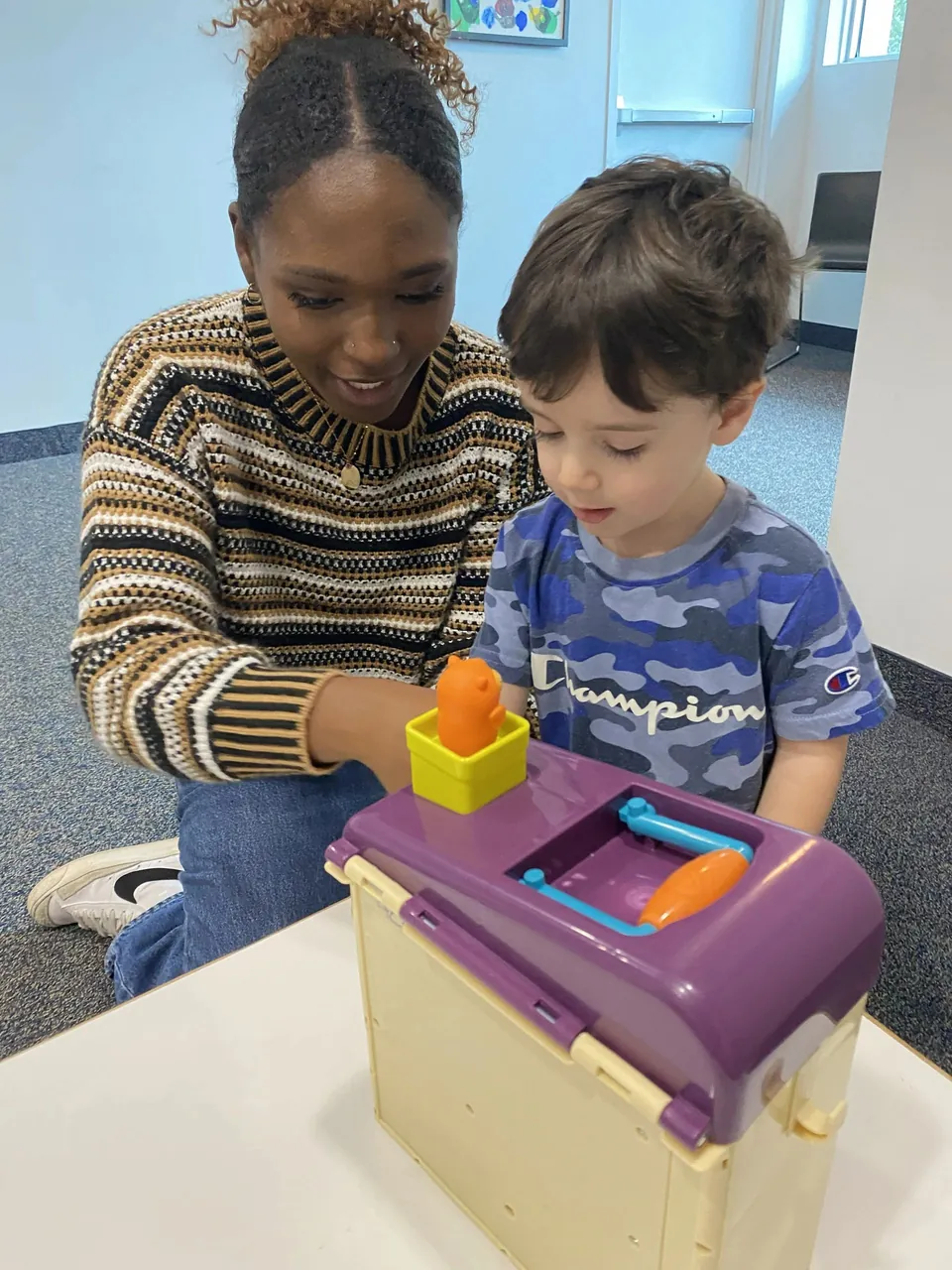
A good modern ABA session for a young child usually looks a lot like play. A Registered Behavior Technician (RBT) works one-on-one with your child at home, at school or in the community, following a plan written by a Board Certified Behavior Analyst (BCBA). The RBT sets up short learning opportunities inside activities your child already enjoys, records how your child responds, and the BCBA reviews that data regularly to adjust the plan. Parents are coached so the same strategies work when the therapist is not there.
Older approaches relied heavily on table work and drills. Today many programs, including ours, use naturalistic, play-based teaching that blends behavioral and developmental science; these approaches have their own body of research[4].
What the research says
ABA for autism became widely known after a 1987 study reported large gains in young children who received intensive behavioral treatment[5]. Since then hundreds of studies have been published. To be straightforward about the evidence:
- A 2018 Cochrane review of early intensive behavioral intervention found that, after about two years, children who received it tended to score better on adaptive behavior, IQ and language than children in typical special-education services. The reviewers rated the evidence as low quality because there are few randomized trials, and they did not find a difference in autism symptom severity or problem behavior[6].
- The American Academy of Pediatrics' clinical report on autism describes behavioral and developmental interventions as the core of treatment and recommends starting intervention as soon as a delay is identified, without waiting for a formal diagnosis[7].
In plain terms: ABA has the largest evidence base of the autism therapies, results vary a lot from child to child, and early, consistent, individualized support tends to matter most.
Who provides ABA
- BCBA (Board Certified Behavior Analyst): holds a graduate degree, completed supervised fieldwork and passed a national certification exam[8]. The BCBA assesses your child, writes the treatment plan, supervises the therapists and trains parents.
- RBT (Registered Behavior Technician): completes 40 hours of training, a competency assessment and a certification exam, and works under ongoing BCBA supervision[9]. The RBT delivers most of the direct sessions.
You can confirm any BCBA's or RBT's certification for free on the BACB registry[10].
How to choose a good ABA provider
- A BCBA does the assessment and stays involved, not just on paper
- Goals are written in plain language and matter to your family's daily life
- Your child is generally happy to participate, and sessions use play and natural rewards
- You get parent coaching and regular progress updates with real data
- The team talks to your child's teachers, speech and occupational therapists
- Hours are recommended based on your child's needs, not a one-size-fits-all number
Common concerns about ABA
Some autistic adults and advocates have criticized older, compliance-heavy forms of ABA. Those concerns are worth taking seriously. A good program respects your child's dignity and assent, does not try to eliminate harmless differences like stimming, focuses on skills that increase your child's independence and quality of life, and treats parents as partners. Ask any provider how they handle these issues.
Getting started in South Florida
Thrive Behavioral Therapy provides in-home, school-based and community-based ABA across Miami-Dade and Broward. Many commercial insurance plans in Florida cover ABA for eligible children, and we can help you check your benefits (see insurance). To talk it through, book a free 15-minute consultation.
References
- Baer DM, Wolf MM, Risley TR. Some current dimensions of applied behavior analysis. Journal of Applied Behavior Analysis 1968;1(1):91-97. https://doi.org/10.1901/jaba.1968.1-91
- Florida Statutes s. 627.6686, Coverage for individuals with autism spectrum disorder required (Steven A. Geller Autism Coverage Act). https://www.flsenate.gov/Laws/Statutes/2024/627.6686
- Shaw KA, et al. Prevalence and Early Identification of Autism Spectrum Disorder Among Children Aged 4 and 8 Years. MMWR Surveillance Summaries 2025;74(SS-2). Centers for Disease Control and Prevention. https://www.cdc.gov/mmwr/volumes/74/ss/ss7402a1.htm
- Schreibman L, et al. Naturalistic Developmental Behavioral Interventions: Empirically Validated Treatments for Autism Spectrum Disorder. Journal of Autism and Developmental Disorders 2015;45(8):2411-2428. https://doi.org/10.1007/s10803-015-2407-8
- Lovaas OI. Behavioral treatment and normal educational and intellectual functioning in young autistic children. Journal of Consulting and Clinical Psychology 1987;55(1):3-9. https://doi.org/10.1037/0022-006X.55.1.3
- Reichow B, Hume K, Barton EE, Boyd BA. Early intensive behavioral intervention (EIBI) for young children with autism spectrum disorders. Cochrane Database of Systematic Reviews 2018, Issue 5. CD009260. https://doi.org/10.1002/14651858.CD009260.pub3
- Hyman SL, Levy SE, Myers SM; AAP Council on Children With Disabilities. Identification, Evaluation, and Management of Children With Autism Spectrum Disorder. Pediatrics 2020;145(1):e20193447. https://doi.org/10.1542/peds.2019-3447
- Behavior Analyst Certification Board. Board Certified Behavior Analyst (BCBA) requirements. https://www.bacb.com/bcba/
- Behavior Analyst Certification Board. Registered Behavior Technician (RBT) requirements. https://www.bacb.com/rbt/
- Behavior Analyst Certification Board. Verify certification (Certificant Registry). https://www.bacb.com/verify-certification/
Frequently asked questions
Please reach us at info@thrivebehavioraltherapy.com if you cannot find an answer to your question.
Is ABA therapy only for autism?
ABA is used most often with autistic children, but its principles are also used for other developmental disabilities and for everyday behavior challenges. Insurance coverage for ABA in Florida is usually tied to an autism diagnosis.
How many hours of ABA does a child need?
It depends on the child. After an assessment, the BCBA recommends a number of hours based on your child's goals, age and schedule, including school. Hours are adjusted up or down as your child progresses.
At what age can ABA start?
ABA can start as soon as a need is identified, often in toddlers. The AAP recommends starting intervention for developmental delays right away rather than waiting. See ABA for toddlers.
Is ABA covered by insurance in Florida?
Florida law requires many health plans to cover ABA for eligible children with autism, though self-funded employer plans and some others may differ. See insurance or call us and we will help check your plan.
Do parents have to participate?
Yes. Parent coaching is part of every Thrive program because children make the most progress when strategies are used consistently between sessions.